Serving Campbell, CA and surrounding areas. (669) 282-6351
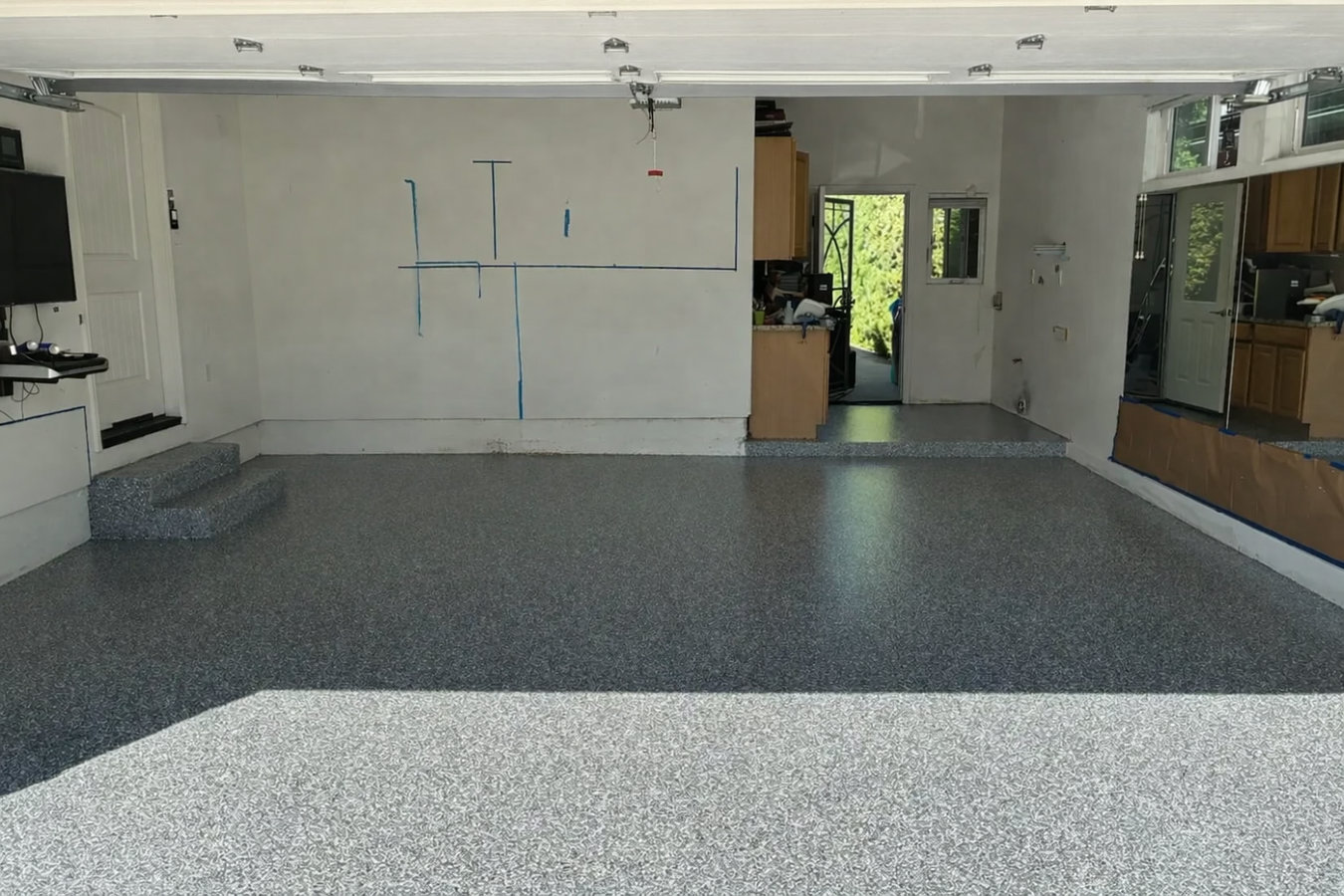
Cracked garage slabs, uneven floors, and decades-old concrete that keeps getting worse - we install new concrete floors with the base prep, reinforcement, and permits your project actually needs.
Concrete floor installation in Campbell involves removing the existing surface, grading and compacting the subgrade, laying a gravel base, and pouring a reinforced slab to the right thickness - most residential garage and basement floors take one to two days on-site, with a curing period before normal use.
For Campbell homeowners, the challenge is often the ground underneath. The Santa Clara Valley's clay-heavy soils expand and contract with the seasons, and a floor poured over a poorly prepared base will show cracks within a few years regardless of how well the pour itself went. Many of Campbell's homes were built in the 1950s and 1960s, and garage slabs from that era were sometimes poured thin with minimal base work.
If your project involves an outdoor surface in addition to interior floors, our garage floor concrete service covers vehicle-specific thickness and drainage requirements that differ from standard interior slabs.
Hairline cracks are normal, but cracks wider than a quarter-inch, cracks where one side sits higher than the other, or cracks that grow over time point to a slab failing from below. In Campbell, this pattern is often caused by clay soils expanding and contracting with seasonal rain - and it typically means replacement rather than patching.
If you tap the floor and hear a hollow sound, or if certain spots feel slightly springy, the concrete has separated from the soil beneath it. This happens when the ground settles or when water erodes the base layer over time. Patching the surface will not fix the problem - the cause is underground.
If water sits in puddles on your garage or patio floor instead of draining away, the slab was poured without enough slope toward a drain or has settled unevenly. Standing water accelerates surface deterioration and can seep into the soil below, making the settling worse over time.
Concrete floors in homes built in the 1980s and 1990s are reaching the end of their practical lifespan. Spalling - where the surface flakes or chips away - and persistent staining that will not clean up are signs the surface has broken down. At that stage, resurfacing is a short-term fix, and replacement gives you a floor that will last another generation.
We install concrete floors for garages, basements, workshops, and garage conversion projects throughout Campbell. Every job starts with assessing the existing surface and soil condition - we check for soft spots, poor drainage, and base problems before quoting anything, because the prep work determines how long the new floor will last. We then remove the old material, compact and grade the subgrade, lay a gravel base layer, and pour the slab to the correct thickness. Standard garage floors that carry passenger vehicles are at least four inches thick; floors that need to support heavier loads get five to six inches with additional reinforcement.
Finish options range from a standard broom finish - practical, non-slip, and easy to maintain - to a smooth trowel finish for interior spaces where looks matter more than grip. We cut control joints into every slab to guide any future cracking into predictable straight lines rather than random fractures. For homeowners converting a garage to living space, we install floors to the specifications required by the City of Campbell for habitable rooms. We also offer concrete pool decks for projects that include outdoor surfaces requiring different drainage slopes and slip-resistant textures.
Full demo of old slab, proper base prep, and a new four-to-six-inch pour suited to vehicle loads.
Non-slip textured surface - the practical standard for garages, workshops, and outdoor-adjacent spaces.
Clean, polished look for interior spaces being converted to living areas or finished rooms.
Poured to city habitability standards for homeowners converting garage space to living area.
Campbell's clay-heavy soils are the most important local factor in concrete floor work. Clay expands when it absorbs water during winter rains and then contracts again as it dries through summer. A slab poured over that kind of ground without a proper compacted gravel base will start moving and cracking within a few years. Contractors who primarily work in areas with stable sandy soil sometimes underestimate this - and Campbell homeowners pay for it later. The Portland Cement Association has detailed guidance on subgrade preparation for exactly this kind of variable-soil environment. The Bay Area's seismic activity also matters - we include reinforcement detailing suited to the lateral forces Campbell floors can experience from nearby fault activity.
Timing matters here too. Campbell's summers are hot and dry, which causes fresh concrete to dry at the surface before it has cured properly underneath - the main cause of surface cracking and dusting that shows up within the first year. We schedule pours for early morning during warm months and use curing compounds when needed. We work regularly throughout the South Bay, including in Mountain View and Los Gatos, where the same soil and climate conditions shape how concrete work gets done.
We respond within 1 business day. Most Campbell contractors will offer a free on-site estimate - worth scheduling even if you are still comparing options, because it lets you ask questions and assess soil and drainage issues before getting a written number.
For structural floors - garages, basement slabs, or conversion projects - we submit the permit application to the City of Campbell on your behalf. Approval typically takes a few business days to a couple of weeks depending on the city's workload.
The crew removes existing concrete or debris, grades and compacts the soil, and lays a gravel base layer. This is the most important phase - a properly prepared base is what separates a floor that lasts 30 years from one that cracks in five.
Pouring day takes most of a single day for a standard garage floor. Light foot traffic is safe after 24 to 48 hours; keep vehicles off for at least a week. We do a final walkthrough and give you care instructions before we close out the job.
Free on-site estimate. Permits handled. Written quote before any work begins.
(669) 282-6351Campbell sits on expansive clay soils that require a compacted gravel base before any pour. We size and compact that base layer specifically for local soil conditions - not a generic spec copied from a drier-climate project. It is the difference between a floor that holds up through a decade of wet winters and one that starts cracking in year three.
Unpermitted structural floors are one of the most common issues Campbell homeowners discover during a home sale - buyers' inspectors find it, and it can delay or kill a deal. Every structural floor we install goes through the City of Campbell's permit process, so the work is inspected, documented, and on record when it matters most.
We have installed concrete floors across Campbell's neighborhoods, from the older ranch-house blocks near downtown to newer developments closer to the city's edges. That local repetition means we know where drainage problems are common, how the soil typically behaves, and which permit reviewers require what - before a project even starts.
California's contractor licensing requirements are among the most rigorous in the country. You can verify our license status at any time through the California Contractors State License Board - it takes about two minutes and tells you whether the license is active and whether any complaints are on file.
A concrete floor is one of the most permanent parts of your home - it is not something you want to redo in five years because the base work was cut short. We bring the local knowledge, permit handling, and base preparation that Campbell properties specifically need to get it right the first time.
Outdoor concrete surfaces around a pool require different drainage slopes and slip-resistant finishes than indoor floors - we handle both in the same project when needed.
Learn moreFocused specifically on garage slabs - including thickness for vehicle loads, vehicle-grade finishes, and the drainage slope that keeps water moving toward the door rather than pooling.
Learn moreSpring is the best time to schedule a pour before summer heat arrives - contact us now to get on the calendar.