Serving Campbell, CA and surrounding areas. (669) 282-6351
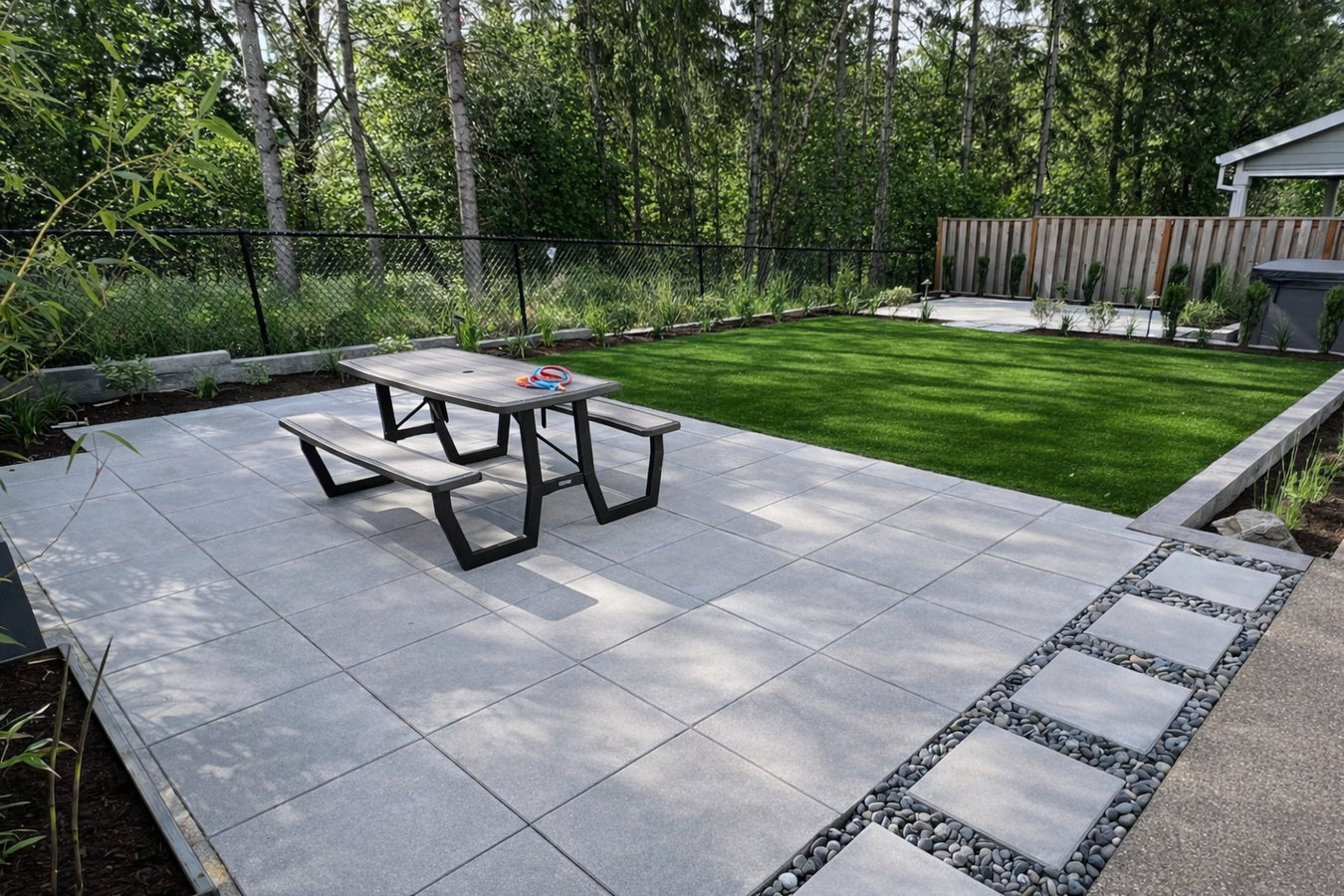
A dirt yard or crumbling old slab keeps you from enjoying Campbell's mild climate. We build concrete patios with the soil prep and drainage details that keep them level and crack-free for decades.
Concrete patio construction in Campbell means excavating the area, compacting and grading the soil, pouring a properly finished slab, and cutting control joints to manage future movement - most residential patios take one to three days of active work, then a curing period before furniture goes on.
In Campbell specifically, the clay-heavy soils that run through much of Santa Clara County are the detail that separates a patio that holds up from one that cracks in a few years. Clay expands when wet and shrinks when dry - that movement puts stress on slabs from underneath. Getting the subgrade right before the pour is the most important part of the job, and it's the step most homeowners never see.
For homeowners planning to upgrade the full backyard, many pair a new patio with stamped concrete services to add texture and style, or consider concrete pool decks if the project includes a pool area.
Hairline cracks are normal, but a crack wider than a quarter-inch - or where one side sits higher than the other - means the slab has shifted. In Campbell, clay soil expanding and contracting with seasonal rain is a common cause. Patching won't stop the movement underneath.
If puddles sit on your patio for hours after a rainstorm, the slab has settled unevenly or was never graded correctly. Standing water works into small cracks and weakens the slab over time. This is common in Campbell homes where patios were poured decades ago without proper drainage planning.
Many Campbell homeowners with older ranch-style homes have backyards that were never improved. If you avoid your backyard because there's nowhere comfortable to sit, a concrete patio is one of the most cost-effective ways to create usable outdoor living space in Campbell's mild climate.
If a raised edge or sunken section has caught you off guard, that's a safety issue that won't fix itself. Uneven concrete is especially common in Campbell neighborhoods where large tree roots have grown under older slabs. A contractor can assess whether the edge can be ground down or whether the section needs to come out.
Every job starts with a site visit to check slope, drainage, soil conditions, and any trees or roots near the planned area. We then excavate, compact, and grade the subgrade, add a gravel base layer, and set the forms before the pour. Standard residential patios are four inches thick - if you plan to place a hot tub, outdoor kitchen, or other heavy structure, we pour to six inches and factor in the weight distribution in the design.
Finish options range from a practical broom finish to decorative surfaces. We also look at how the patio connects to your home's drainage so rainwater moves away from the foundation rather than toward it. For homeowners who want the full outdoor upgrade, we can discuss stamped concrete or pool deck work as part of the same project.
Non-slip, low-maintenance - the practical choice for most residential patios.
Textured pebble surface - popular with homeowners wanting added curb appeal.
For patios supporting hot tubs, outdoor kitchens, or pergola footings.
Full excavation, soil prep, and pour for yards with no existing patio.
Campbell's Mediterranean climate - warm, dry summers and mild, wet winters - is genuinely great for outdoor living. You can realistically use a well-built patio nine to ten months of the year. But that same wet-dry cycle is exactly what puts stress on improperly prepared slabs. The expansive clay soils in much of Santa Clara County swell in winter rain and shrink in summer heat. A contractor who skips proper subgrade work is setting the patio up for failure within a few years.
Mature trees are another factor in Campbell's older neighborhoods - large oak, walnut, and fruit trees can push roots under a new slab and crack it from below. We walk every site before designing anything and flag root or tree issues upfront. We serve homeowners in Campbell and nearby communities like Saratoga. For permit information, the City of Campbell Building Division outlines what requires a permit for flatwork.
We respond within 1 business day to schedule a time to walk your yard. We check slope, drainage, soil, and any tree roots before measuring and providing a written itemized quote.
For most new patios in Campbell, we apply for the required building permit before any work begins. Approval typically takes one to two weeks. You shouldn't have to manage any of that paperwork.
The crew marks out the area, removes grass or old concrete, and excavates several inches of soil. We compact the ground and add a gravel base before setting the forms. This is the most important phase of the job.
After the pour, the slab cures for 24-48 hours before walking on it. The city inspector confirms the finished work, and you receive that documentation for your home records. We walk you through the result before we leave.
We respond within 1 business day - no obligation. After you reach out, someone from our office calls to schedule a free on-site estimate so we can assess your yard, check the soil, and give you an accurate number in writing.
(669) 282-6351We've worked throughout Campbell and the South Bay long enough to know how the local clay soils behave across the seasons. Every patio job includes proper subgrade removal, compaction, and a gravel base designed to handle the wet-dry movement that causes most local patio failures.
Campbell requires a building permit for most new patio slabs. We manage the application and inspection coordination from start to finish. Your patio is legally documented and on record - no surprises when you go to sell your home.
Our California C-8 Concrete Contractor license is on file with the CSLB. We carry both general liability and workers' compensation insurance, which protects you if anything unexpected happens during the job.
Campbell has mature trees in many older neighborhoods, and roots under a new slab cause cracks within a few years. We walk every yard before designing the layout and flag any roots or protected trees that need to be factored into the plan.
You can read more about what good concrete flatwork preparation looks like on the American Society of Concrete Contractors website. The combination of proper soil work, permit compliance, and smart site assessment is what makes the difference between a patio that lasts decades and one that needs repairs in five years.
Add texture and pattern to your patio slab with stamped concrete that mimics stone, brick, or tile at a fraction of the installation cost.
Learn moreIf your backyard project includes a pool, we build slip-resistant concrete decks that tie the outdoor space together cleanly.
Learn moreSpring and fall fill up fast - reach out now and we will schedule your on-site visit before the best installation windows book up.