Serving Campbell, CA and surrounding areas. (669) 282-6351
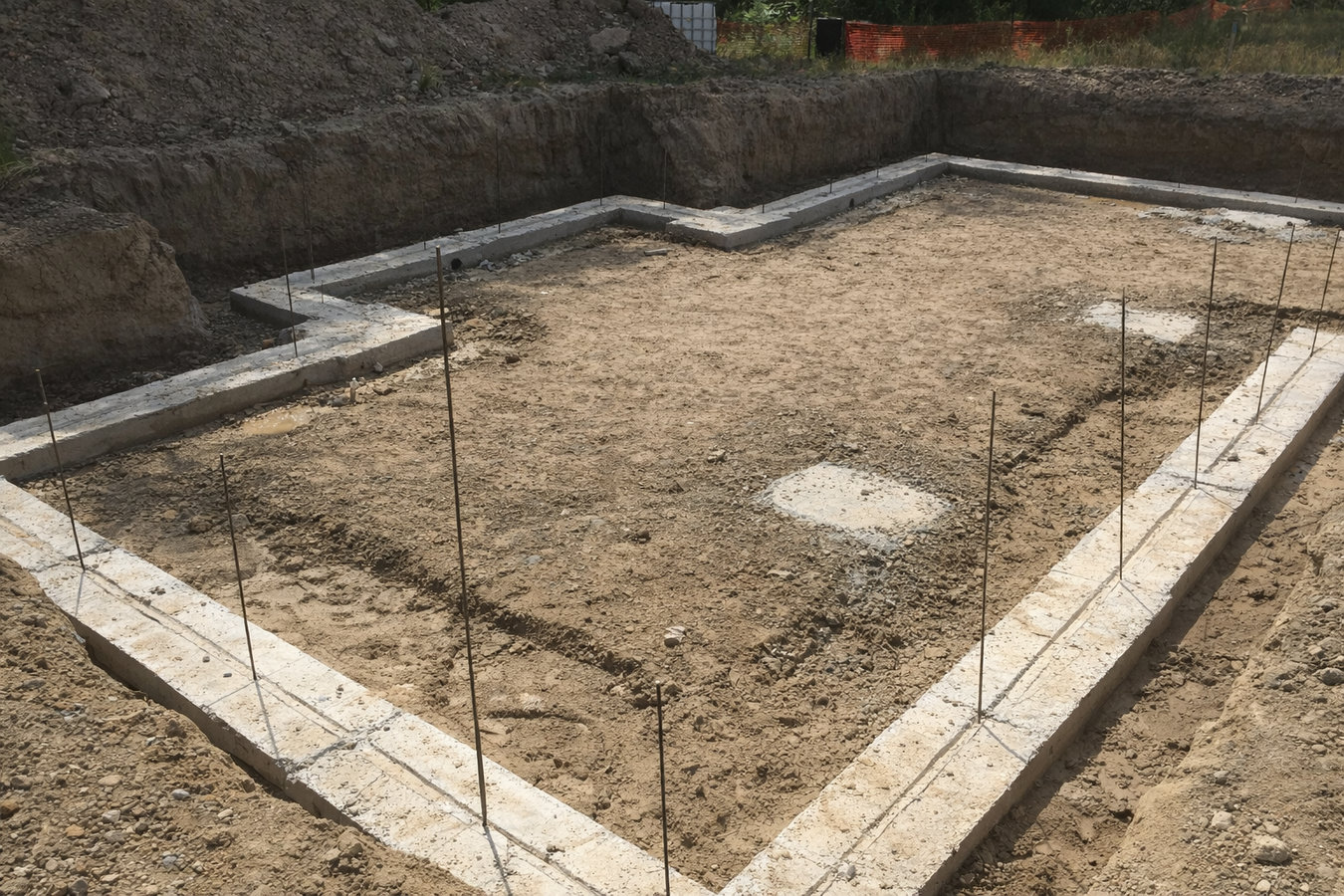
A leaning deck or a structure pulling away from your home often comes down to failing footings. We size, reinforce, and inspect every footing for Campbell's soil conditions and Bay Area seismic requirements.
Concrete footings in Campbell are the buried anchor pads or strips that hold up a deck, addition, retaining wall, or patio cover - most residential footing projects take one to three days of active construction, with the full timeline running two to four weeks once the City of Campbell permit process and curing period are factored in.
A footing is not the same as a foundation - it is specifically the widened concrete base at the very bottom that spreads the weight of a structure across enough soil to prevent sinking or shifting. In Campbell, getting that sizing right matters more than in most markets because the clay-heavy soils in the Santa Clara Valley move with every rainy season. A footing poured on top of unsupported clay is a footing that will fail within years, not decades.
For projects that go beyond footings into a complete structural base - like an ADU, a new garage, or a full home addition - our foundation installation service covers the full scope, from soil evaluation through the inspected pour and curing period.
If a deck post, fence post, or pergola column that used to stand straight is now visibly tilted - or if you can see a gap opening between a structure and your home's exterior wall - the footing underneath may have shifted or deteriorated. In Campbell's clay-heavy soils, this kind of movement often happens gradually over several rainy seasons. A shifted footing is much cheaper to address before the structure above it is also damaged.
Any new structure that carries weight - a deck, patio cover, room addition, or freestanding pergola - needs proper footings before anything else is built. In Campbell, the city's building department will require footings to be inspected before the project can move forward. This is not optional, and skipping it can create problems when you try to sell your home.
Diagonal cracks running from the corners of doors or windows - especially cracks wider at one end than the other - are one of the most reliable signs that something below is moving unevenly. In older Campbell homes built before modern seismic and soil standards, this kind of cracking can indicate that original footings have settled or shifted over decades.
If standing water consistently collects against a post base, retaining wall, or near your home's foundation after rain, that moisture is working its way into the soil around your footings. Over time, saturated soil loses its ability to support weight evenly. Campbell gets most of its rain in concentrated bursts from November through March, making this a real recurring risk for properties with poor drainage.
We pour footings for decks, patio covers, room additions, retaining walls, pergolas, and freestanding structures throughout Campbell and the surrounding South Bay. Every project starts with a site visit - not a phone quote. We look at the soil type, the slope of the land, and the specific location of the footings before we give you a number. In Campbell, we also discuss the permit process at that first meeting and let you know whether your project requires a structural engineer's review before the city will approve it. We handle the permit application and coordinate the city inspector's pre-pour visit so the work is documented correctly.
For homes where the project involves both footings and a larger paved area - like a retaining wall adjacent to a new driveway approach - we coordinate our footing work with our foundation raising expertise when the structure above requires lifting or leveling before the new footings are set. Every footing we pour includes the steel reinforcement and anchor hardware required by California's seismic building standards - there are no shortcuts on the reinforcement because that is the part you can never go back and fix once it is buried.
Isolated pad or drilled pier footings for attached and freestanding outdoor structures - sized for your specific soil and load.
Continuous strip footings designed for lateral soil pressure - suits hillside lots and properties with significant grade changes.
Footings for attached living spaces and accessory structures, coordinated with the structural engineer drawings the city requires.
Individual pad footings for pergolas, carports, and freestanding covers - includes anchor hardware for seismic tie-down.
Two factors make footing work in Campbell more involved than in many other parts of the country: the soil and the seismic zone. A significant portion of Campbell's residential neighborhoods sit on alluvial soils with a high clay content. Clay expands when it absorbs water in winter and shrinks when it dries in summer. That cycle puts constant stress on footings that were not designed for it. Many of the homes built in Campbell during the 1950s and 1960s - when the city grew rapidly - were set on footings that predated modern soil-specific engineering requirements. If you are adding a structure to one of those older homes, your contractor needs to look at what is already there before assuming the existing footings can handle additional load. The American Concrete Institute publishes the industry standards that govern how footings are designed and poured - standards our work is built on.
The seismic picture is equally important. Campbell sits near both the Hayward and Calaveras faults, and California's building code requires specific steel reinforcement and connection hardware in footings to resist earthquake forces. The USGS Earthquake Hazards Program maps the seismic risk across the Bay Area - and Campbell is consistently in the higher-hazard zones. That requirement drives the cost of footing work here above the national average, but it is also what makes Bay Area structures more resilient when the ground moves. We serve homeowners throughout the South Bay, including Los Gatos and Saratoga, where the same clay soil conditions and seismic requirements apply.
We reply within one business day to schedule a free on-site visit. We check the soil, slope, and the specific placement of each footing before giving you a written estimate - phone quotes for footing work are rarely accurate.
For most structural projects in Campbell, we pull the building permit and coordinate any required engineer drawings before the first shovel goes in. You do not need to go to city hall - we manage the paperwork and let you know when approval comes through.
We dig to the required depth, set wooden forms to shape the concrete, and place the steel reinforcing bars inside. Before any concrete is poured, a city inspector visits to verify depth, width, and reinforcement all meet the approved plan - this pre-pour inspection is your strongest protection.
Once the inspection passes, we pour and finish the footings. The concrete reaches working strength within about a week, but full strength takes closer to a month. We coordinate the final city sign-off and give you the permit documentation to keep with your home records.
Free on-site estimate. We assess your soil, handle the permit, and coordinate the city inspection - all included.
(669) 282-6351We assess the soil on your specific property before finalizing footing dimensions. Clay-heavy ground in Campbell requires wider, deeper footings than stable soil - and we size accordingly so the price we quote reflects what your yard actually needs.
Every footing we pour includes the steel rebar and anchor hardware required by California's seismic building standards for the Bay Area's fault zone. The hardware you cannot see once it is buried is the hardware that matters most when the ground shakes.
Our written estimates break down each footing by depth, reinforcement, and permit cost. No phone quotes, no post-excavation surprises. The range reflects real project variables - we tell you which ones apply to your property before you commit.
The City of Campbell requires a pre-pour inspection before any concrete goes in. We schedule the inspector visit, manage the timing around your project, and give you the permit closeout documentation at the end - so your work is fully on record.
Footings are the part of a construction project that nobody ever sees again - which is exactly why doing them right from the start matters so much. Everything built on top of them depends on what we put in the ground.
Lifting an existing home or structure to add living space or address foundation problems - starts with evaluating the footings already in place.
Learn moreComplete foundation work for new structures or full replacements - footings are the buried anchor that makes the rest of the foundation possible.
Learn moreCall today or submit your details online. We will get back to you within one business day with a free on-site estimate.