Serving Campbell, CA and surrounding areas. (669) 282-6351
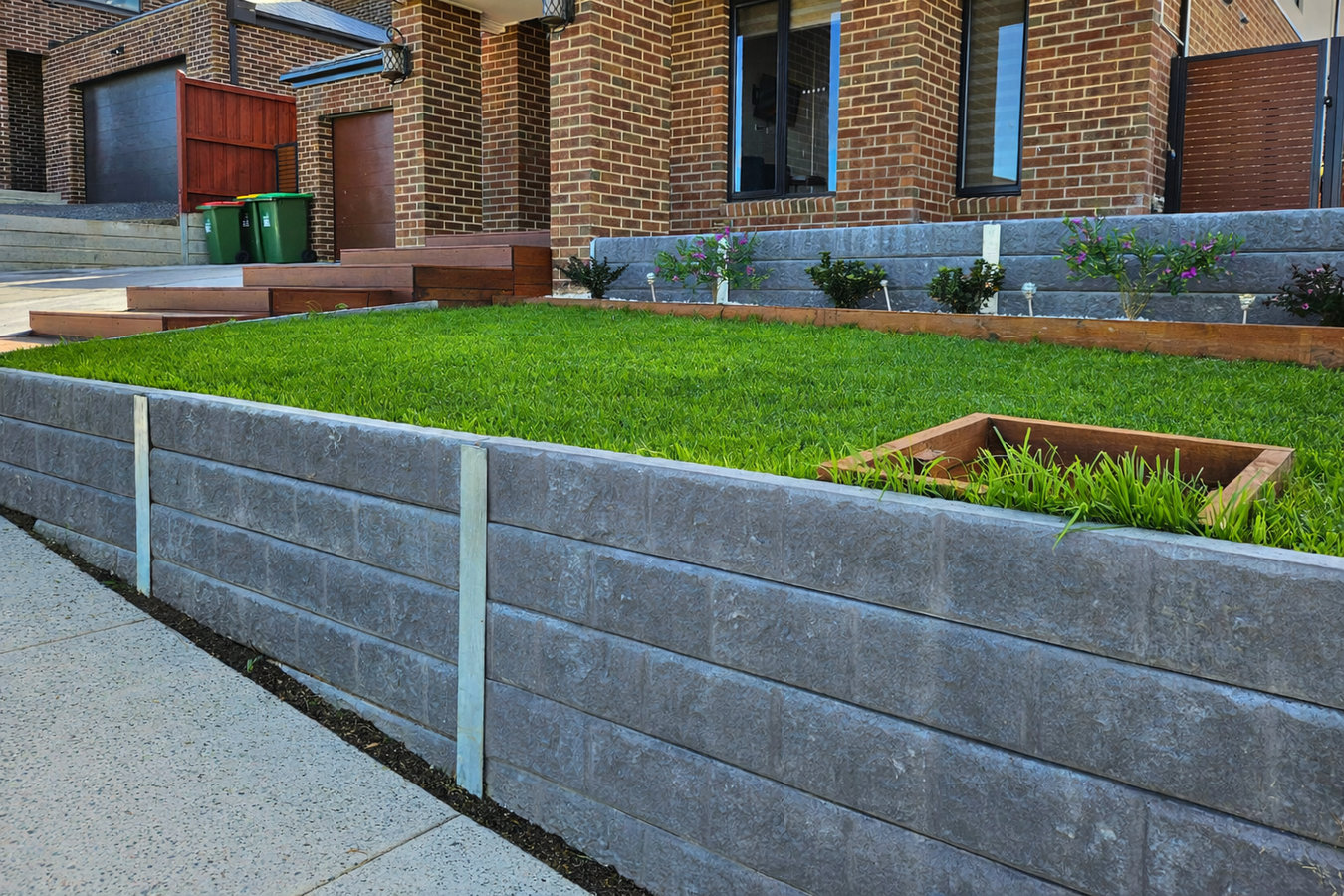
Sloped yards erode, soil washes onto driveways, and old walls crack. We build concrete retaining walls with proper drainage, seismic design, and permits handled so your slope stays put year after year.
Concrete retaining wall construction in Campbell starts with excavation and a buried footing, then builds up the wall with a drainage layer behind it to prevent water pressure buildup - most residential projects take two to five days of active work once permits are approved.
For Campbell homeowners, retaining walls do more than look tidy. They hold back soil on sloped properties, keep hillside yards from washing down onto driveways after winter rains, and create flat, usable terraces out of slopes that were never good for much. Many homes in Campbell's hillside neighborhoods deal with exactly this problem every rainy season.
Retaining walls also connect naturally to your property's foundation health. If you are also thinking about the underlying structure, our concrete floor installation work can turn a newly leveled area into a finished, usable surface once the wall is in place.
If every winter storm leaves a layer of dirt on your driveway, patio, or walkway, the slope above is eroding. This is common in Campbell's hillside neighborhoods, where clay soils become heavy and mobile when saturated. A retaining wall stops the erosion at the source rather than just cleaning up after it each season.
A wall that is no longer straight, or that has horizontal cracks running across its face, is under more pressure than it was designed for. In Campbell, this often happens to older walls built before current seismic and drainage standards. A leaning wall is not just cosmetic - it can fail suddenly, especially during or after an earthquake.
If part of your yard is too steep to mow, plant, or walk on safely, a retaining wall can convert that slope into flat, usable terraces. Many Campbell homeowners with hillside lots use retaining walls to create level garden beds, play areas, or outdoor spaces that would otherwise remain inaccessible.
When soil on a slope has no barrier, rainwater carries it downhill - sometimes directly toward your house. If you notice water collecting against your foundation after Campbell's winter rains, a retaining wall uphill of the problem area can redirect both the soil and the water away from your home.
We build poured concrete and concrete block retaining walls for residential properties throughout Campbell. Every project starts with a site assessment - we look at the slope, soil type, available equipment access, and how much soil the wall will need to hold back. For walls over four feet tall, we coordinate with a licensed engineer and manage the full permit process through the City of Campbell Building Division. Drainage is always included: we install a gravel layer and a perforated pipe behind the wall so water from Campbell's wet winters escapes safely rather than building up pressure.
The right wall type depends on your project. Poured concrete walls are stronger for taller applications and work well where the wall face will be visible. A block retaining wall suits shorter garden-level projects where you want a more modular look. For projects that also require anchoring a structure or adding steps, we connect this work to our concrete footings service to make sure everything ties together structurally.
Best for taller walls that need to hold substantial soil weight - strong, monolithic, and long-lasting.
Good for shorter garden and landscape walls where a modular appearance suits the yard design.
Full permit and engineering coordination for walls over four feet - required by the City of Campbell.
Gravel layer and perforated pipe behind every wall to prevent water pressure buildup during rainy season.
Campbell sits on expansive clay soils that swell when wet and shrink when dry - a cycle that happens every year with the region's wet winters and dry summers. That constant ground movement puts more stress on retaining walls here than in areas with stable soil. A wall built without accounting for local soil behavior may look fine at first, but it can start showing cracks or leaning within a few years as the ground shifts beneath it. The western and hillside portions of Campbell are especially affected, where older walls built before current drainage and seismic standards are now reaching the end of their useful life. The American Society of Civil Engineers provides guidance on how drainage design affects wall longevity in regions with variable soil conditions.
The Bay Area's seismic activity adds another layer of complexity. Campbell lies near both the Hayward and Calaveras faults, and walls here need lateral load resistance built into their design - not just the ability to hold back soil weight. We regularly work on retaining wall projects across Los Gatos and Saratoga, where hillside properties share the same soil and seismic conditions as Campbell. That experience shapes how we design and build every wall we install.
We respond within 1 business day and schedule a visit to your property. Phone quotes for retaining walls are rarely accurate - we need to see the slope, soil, and available equipment access before giving you any numbers.
For walls over four feet, we submit plans to the City of Campbell and coordinate any required engineering review. Plan review typically takes two to four weeks - we keep you updated and handle the process completely.
Work begins with digging out the footing area and installing drainage behind the wall before any concrete is poured. This is the most disruptive day of the project - expect equipment and disturbed soil.
The wall goes up, the city inspector visits before backfill is complete, and the concrete cures over the following week. We walk you through what to watch for during the first rainy season.
Free on-site estimate. Permits handled. No surprises on timeline or cost.
(669) 282-6351Campbell averages about 15 inches of rain per year, most of it from November through March. We size the drainage layer and pipe behind every wall for those wet-season loads, not just average conditions - because a wall that fails in February costs far more than one built with proper drainage from the start.
Every retaining wall we build for Campbell properties accounts for lateral seismic forces from nearby fault systems. For permitted walls, this means engineer-stamped plans that the city inspector reviews before work is buried - giving you documentation that protects your home's value.
We manage the full City of Campbell permit process, including coordination with the Building Division and scheduling the required inspection before backfill. You do not need to navigate the permit office yourself.
California requires a valid state contractor's license for this type of work. You can verify any contractor's license number through the California Contractors State License Board in about two minutes. A licensed contractor also carries the insurance that protects you if something unexpected happens on your property.
Retaining walls are one of the more complex residential concrete projects because they involve soil engineering, drainage, seismic design, and permit compliance all at once. We bring all of those pieces together so you end up with a wall that holds up through Campbell winters and earthquake activity for decades.
If your retaining project involves leveling or creating a new surface on the graded area, concrete floor installation turns that space into something finished and usable.
Learn moreEvery retaining wall starts with a properly engineered footing - the buried concrete base that anchors the structure and distributes the load across stable ground.
Learn morePermit season fills up fast before winter rains arrive - reach out now to lock in your project timeline.